Spring in Kingston reveals whatever the winter left behind. Matted leaves you didn’t quite get to before the first snow, bare patches where heavy snowpack sat for months, dead grass near the fence. It all looks worse than it usually is and most lawns in this region bounce back well, but only if the cleanup is done properly. The question most homeowners ask isn’t “should I clean up the yard?” It’s “where on earth do I start?” Keep reading, and this guide will walk you through the full sequence: when the timing is right, what to do first, and which steps make the biggest difference for your lawn this spring.
When to Start Your Spring Yard Cleanup in Kingston
Timing here matters more than most people realize. Go too early and you risk compressing a lawn that isn’t ready for foot traffic, or tearing up young grass before it can properly establish. Snowmould spores spread easily when the turf is still wet and matted from winter.
In Kingston and the surrounding area, the ideal time to start your spring yard cleanup is usually mid-April to early May. Wait until the snow has fully melted and the ground has had a few solid dry days to firm up. A practical test: walk across the lawn and if your feet are leaving deep impressions, it’s still too wet. Daytime temperatures consistently above 5°C are the other condition to look for. Once both are met, you’re ready to get started.
Step 1: Clear the Winter Debris
Start with a full walkthrough of the property. Pick up branches, rake dead leaves and clear out any garbage or debris that got buried under the snowpack over winter. Dead leaves are the most impoirtant part of the cleanup to pay attention to. A layer of wet, compacted leaves sitting on your grass through April can smother the turf below, blocking light and trapping moisture in a way that invites fungal disease and prevents grass from growing. Bare patches that develop from this can take weeks to fill in properly so its best to get the leaves cleared before you do anything else. Branches won’t damage the lawn itself, but they slow down every step after this one.
Step 2: Assess What the Winter Actually Did
Once the debris is gone and you can actually see what you’re working with, take the time to walk the lawn and look for any damage that has been done. Look for bare or thin spots where grass didn’t make it through the winter, or where foot traffic wore it down last fall. Look for flat, grey-brown patches where snow sat for extended periods, which can indicate snowmould. Check for areas that feel spongy or slightly sunken underfoot when walking, which sometimes points to grub activity working through the soil below.
Snowmould is common in Kingston after a heavy winter. It shows up as circular grey or pink patches in the grass, and it can look alarming when the snow first melts. Mild cases tend to recover on their own once the lawn dries out and air starts moving through it so we recommend lightly raking the affected areas which helps to break up the matted growth and lets sunlight reach the soil. For large patches or widespread coverage, it’s worth getting a professional opinion before seeding over areas that might need more work and attention than fresh grass seed can provide.
Step 3: Rake Out the Thatch
Thatch is the spongy layer of decomposing organic material that builds up between the soil surface and the living grass above. Most Kingston lawns have a thatch layer whether you can see it or not. A thin layer under half an inch is actually useful, because it insulates the soil and holds moisture between rain events. But once it builds past a centimetre or so, it starts blocking water and nutrients from reaching the roots. Grass that looks reasonably healthy on top can be struggling badly at ground level, with roots that are shallow and starved without any obvious sign of it from above.
A thorough spring rake, done once the lawn is dry enough, pulls a lot of that built-up material out. It also lifts matted blades so the grass can stand upright again, which matters as flat grass captures light poorly. The amount of grey, fibrous material a seemingly healthy Kingston lawn gives up during a proper spring rake is usually surprising. Most homeowners underestimate how much is down there after a long winter.
Step 4: Tidy the Garden Beds
While you’re working through the lawn, the beds need attention too. Cut back any dead perennials left standing through winter and clear the leaf litter from around any shrubs. Re-edge the borders between bed and lawn where they’ve blurred into each other. Clean bed edges make the whole yard look intentional rather than just maintained while also stopping grass from creeping into the beds over the season. Hold off on mulch until at least mid-May, because soil needs to warm before you insulate it, and laying mulch too early just traps cold and slows the whole process down.
Step 5: Aerate If the Lawn Needs It
Not every lawn needs aeration every spring but if yours gets heavy foot traffic or stays wet when nearby areas drain, compaction is likely the issue. The same applies if the surface feels hard underfoot even after several consecutive dry days.
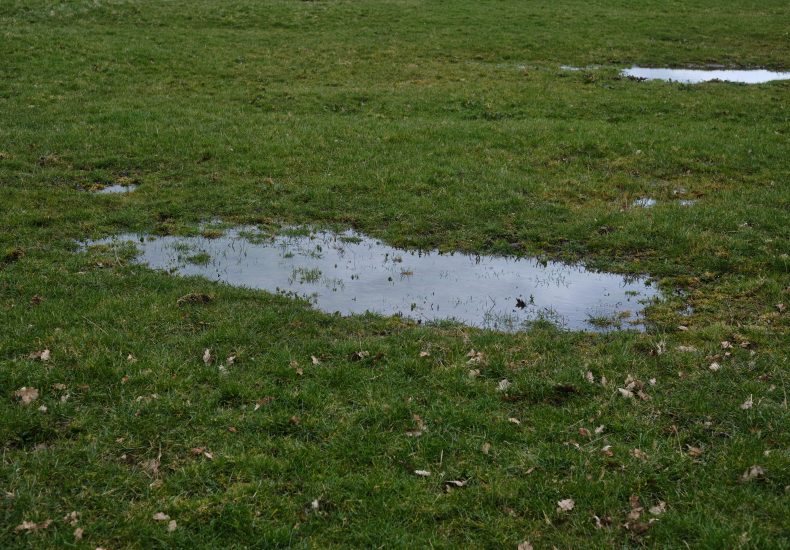
Kingston’s clay soil doesn’t drain the way sandy soil does. After a wet March, you can push a finger two inches into what looks like healthy turf and hit something completley solid. That’s what compaction looks like from the grass’s perspective, and no amount of spring fertilizer can address it on its own. Aeration pulls out small plugs of soil and opens the surface up, so roots can find the gaps and water can start moving again instead of pooling on top. Most lawns here benefit from aeration once a year or so. Fall is often the better timing, but spring aeration is the right call if you’re currently seeing clear signs of compaction.
Step 6: Overseed and Fertilize
Around early May is a solid seeding window in Kingston. Soil temperatures are climbing, there’s usually enough moisture in the ground from snowmelt, and seed has time to establish before summer heat arrives. Fill in bare spots and any areas that came through the winter looking a bit thin.
For fertilizing, wait until the grass is actually putting on visible new growth, not just turning green at the surface. A lawn that’s been under snow for four or five months doesn’t need a heavy push before it’s ready. If you’re not sure which product fits your soil type, a basic soil test is worth doing before you spend money on the wrong thing.
Earth-friendly fertilizer options are worth looking at if you haven’t tried them. They work with the soil biology rather than around it, they tend to produce steadier results than heavy synthetic nitrogen does, and are better all around for the environment.
Your Spring Lawn Cleanup Checklist
Here’s your full Spring checklist:
- Wait for the right conditions: firm ground, consistently above 5°C
- Remove winter debris (leaves first, then branches and litter)
- Assess the lawn for bare spots, snowmould, compaction, and grub damage
- Rake out thatch once the lawn surface is dry
- Clean and edge garden beds (hold mulch until mid-May)
- Aerate if compaction is visible or drainage is poor
- Overseed bare areas
- Fertilize once the lawn is actively growing
A spring lawn care checklist is only useful if you’re working through it at the right point in the season, and starting your spring grass cleanup before the lawn is ready to handle it is one of the most common mistakes homeowners make.
When to Call in the Professionals
Most of this is manageable on your own. If the issues are straightforward, a weekend of cleanup work goes a long way.
But if your lawn has extensive grub damage, or large areas of snowmould that aren’t recovering on their own, a professional assessment before seeding and fertilizing is worth it. Persistent compaction that comes back each spring despite regular aeration is another situation where a professional set of eyes helps.
Marshall’s Lawncare handles spring cleanup across Kingston and the surrounding area, including Amherstview, Loyalist Township, South Frontenac, and the Thousand Islands. We offer free estimates and are happy to help take care of your lawn needs this spring. Contact us today and let’s discuss how we can help.