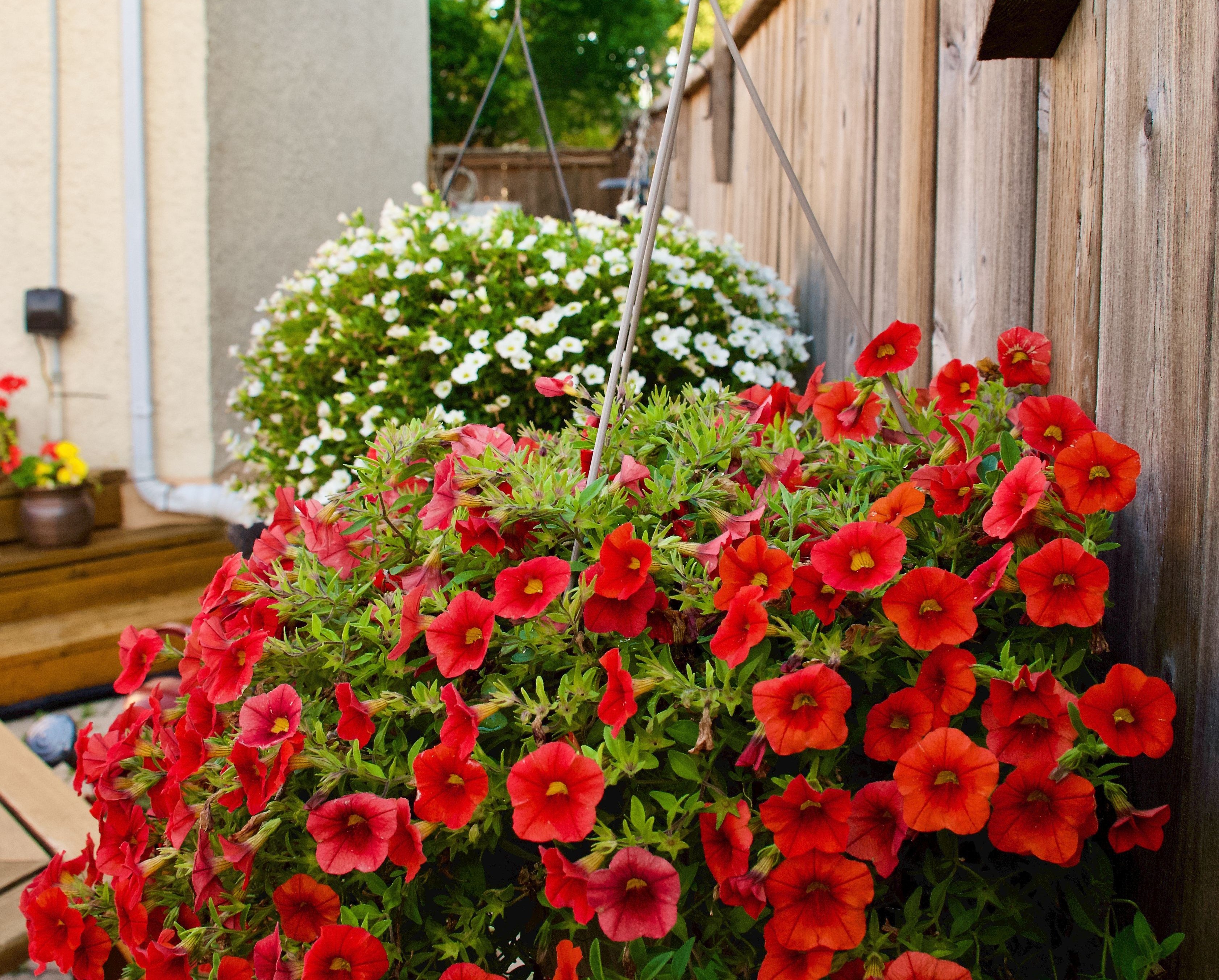
Your basket looked incredible in June, full and bright, spilling over the edges of the pot the way it did on the tag photo. Then July hit, the heat settled in over Kingston, and by the second week you’re pulling crispy leaves off a plant that’s clearly struggling. Baskets dry out faster than almost anything else you grow, and once they fall behind on water, everything else, the blooms, the colour, the shape, starts to slide with them.
Why Hanging Baskets Struggle More Than Garden Beds
A garden bed has feet of soil below it holding moisture in reserve, but a hanging basket has maybe eight or ten inches of soil, hanging in open air, often in full sun, with wind moving across it most of the day. There’s nowhere for that moisture to hide. Roots fill the pot by midsummer too, and a basket planted in May is typically root-bound by July, leaving less actual soil to hold water in between your waterings. This combined with a hot, dry stretch and a basket that was fine on daily watering in June can need water twice a day by the third week of July. Position also matters as plants that don’t constantly hang in the open sun all day can hold water a bit easier.
Watering the Right Way
Morning watering gives the plant time to take up moisture before the sun starts pulling it back out, and it gives the leaves a chance to dry off, which matters for keeping fungal problems away. Push a finger about an inch into the soil, water it if that comes back dry, and hold off if it still feels a bit damp. You can also lift the basket slightly from underneath. A fully watered basket has real heft to it, and once you’ve felt that a few times, you’ll know the difference without needing to check the soil at all.
When you do water, water thoroughly, and keep going until it runs out the drainage holes at the bottom. A quick splash across the surface wets the top inch leaving much of it to evaporate in the sun. During a genuine heat wave, once a day often isn’t enough, and baskets in full sun on a 30-degree day can need a second pass in late afternoon.
Choosing a Basket That Won’t Fight You All Summer
A 12-inch basket and a 10-inch basket don’t behave the same way in July, even with identical plants and identical care. The bigger one holds more soil which means a larger area to hold water in the summer heat. This is why sizing up your baskets can sometimes be helpful for ensuring plants have water. Material matters too as plastic liners hold moisture longer than moss or coco coir, which look better but dry out fast in direct sun and wind. Coco liners aren’t a bad choice, but they mean more frequent watering. Think about exposure before you pick a hook as a basket that gets full sun from noon through 6 PM on a west wall is working against you no matter what’s in it. Spots facing east, or anywhere with afternoon shade, are considerably easier to keep alive through a Kingston summer.
Feeding a Basket That’s Being Watered Every Day
Here’s the part that trips people up: all that watering that keeps the plant alive is also washing nutrients straight through the pot, and a basket fertilized once at planting in May is running on empty by July, even if it still looks fine from a distance. A balanced, water-soluble fertilizer applied every seven to ten days keeps up with that loss. Some gardeners prefer a diluted feed every time they water instead of a stronger dose weekly, and either approach works.
The Midsummer Trim Nobody Wants to Do
By late July, most baskets look rough, with long bare stems carrying blooms only at the tips and less fullness through the centre. The instinct is to leave it alone because it still has flowers but cut it back anyway. Trimming a few inches off the whole basket forces new growth from further down the stem, and within two weeks you’ll have a fuller plant than if you’d left it stretched out. It will look worse the day you do it but it sets the plant up for a good comeback. Deadheading helps too, especially with petunias, calibrachoa, bacopa, and trailing verbena. All four keep blooming harder when spent flowers get removed regularly instead of left to go to seed.
If You Want Something Lower Maintenance
Not everyone wants to check a basket twice a day. If that’s you, look for plants bred to handle drought better. Portulaca tolerates missed waterings better than almost anything else you’d put in a basket, and lantana isn’t far behind. A few calibrachoa varieties hold up well too, though not as well as the tag sometimes claims. None of it needs less soil or a smaller pot. It just forgives you faster when life gets busy and the watering can sits untouched for a day.
We carry a range of drought-tolerant basket plants at the garden centre, along with the soil and fertilizer to keep whatever you choose going through August. If your baskets are already looking rough, it’s not too late to trim them back, feed them properly, and get another good month or two out of them before fall.