There are trees in Kingston that have been standing for sixty years and then there are trees that don’t make it past their second spring. The difference usually isn’t the tree, it’s how you put it in the ground. Most homeowners treat planting like a one-step process: dig a hole, drop the tree, go inside. That works about as well as you’d expect, because trees planted wrong struggle from day one and a struggling new tree is basically an open invitation for every disease or dry spell to have a go at it.
Timing Is Everything
Spring and fall are your ideal planting windows. This is the time period where the soil isn’t frozen solid or dried out and it’s when a new tree can focus on getting its roots established rather than fighting weather. Most trees can handle a tough season just fine but not when combined with having no established root system. Fall is actually the most underrated for Ontario tree planting as the ground remains warm enough for root development despite the cooler fall air. That means a tree planted in September or October will spend the entire winter establishing its root system allowing it to reach its full growing potential once spring rolls around.
Start at a Nursery You Trust
Before you dig anything, think about what the spot actually demands, how close to a structure or a power line you will be and does the soil drain after a heavy rain or does it just sit? At Marshall’s Garden Centre, you’re not browsing a catalogue in the dark. You’re talking to people who know which species perform in this specific region, under Kingston’s particular conditions, and in your actual yard size. Plus with our season long guarantee you can have the confidence that your plant is built for the long haul.
How to Plant a Tree Step by Step
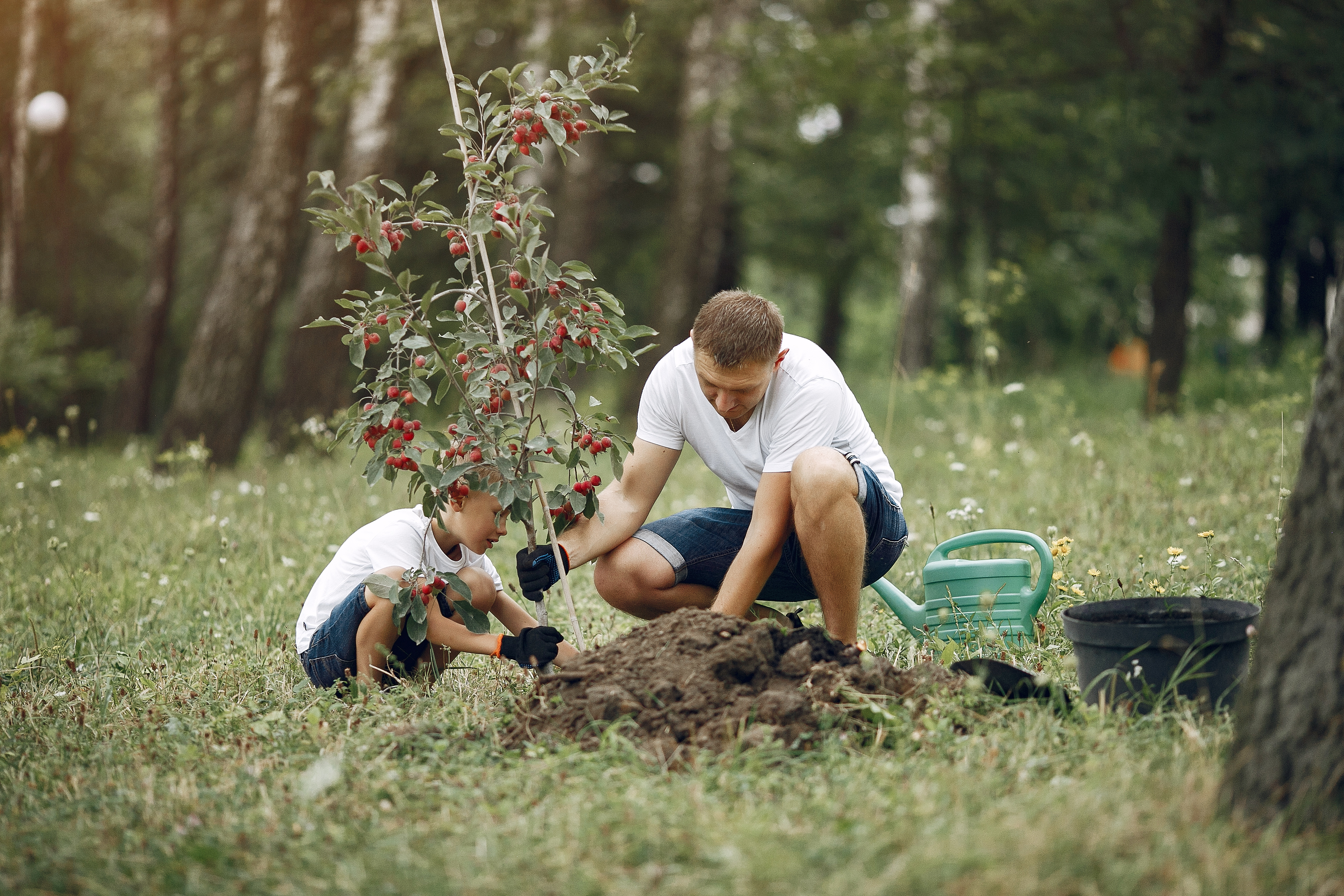
Dig wider than you will need, the hole should be at least twice the size of the root ball but ideally closer to three times. Roots branch out horizontally and they need less soil to puh into from the start. Keeping your hole too small can restrict your root growth and cost your tree years of potential growth. The depth of the hole matters just as much and is often overlooked. You want what’s known as “root flare” or the slight widening at the base of the trunk to sit right at or just above ground level. Burying your tree too much and you’re compromising the trees ability to breathe through its lower bark. Set the tree in the hole and backfill with the exact same soil you have just dug out. New roots need time to adapt to their local soil conditions and filling your hole with a new mix may prevent them reaching out past the new fill area. Watering as you refill the soil help as well allowing water to settle in the soil layer and help pushout any air pockets that may be trapped around the root bulb. Finally you’ll want a nice mulch ring of about two to three inches thick around the base of your tree. More than just looking visually appealing, the mulch will help trap moisture, prevent weeds, and keep the soil temperature consistent.
The First Season: What You’re Actually Watching For
When caring for a tree during its first season its all about watering but rather than how much water focus on how deep. A slow gradual trickle over 20-30 minutes a few times per week is enough to deal with dry stretches. Watering daily or shallow watering keeps roots closer to the surface where the sun will dry things out quickly. This leads to a tree that relies on daily watering to keep going rather than building resilience of its own. Some minor wilting or leaf drop off early in the first few weeks is normal as the tree has just been moved and is adapting to its now home.
We Stand Behind Every Tree We Plant
When Marshall’s plants a tree on your property, it comes with our season long guarantee. We’re not crossing our fingers after we load up and drive away, because we know what we sourced and how we planted it, and we know what it needs to get properly established here in Kingston.
Twenty-plus years of doing this work gives you a pretty good sense of what holds and what doesn’t. Come talk to us about your property, free estimates, no pressure. Bring a photo of your yard, tell us what you’re after, and we’ll point you toward something that’ll still be standing long after we’re gone.