Summer rolls in and Kingston lawns hit a turning point. The lush growth of May slows and the soil starts drying out faster than it did all spring. Foot traffic from kids, dogs, and backyard life starts to take a toll. Somewhere around the second week of July, many homeowners reach the same conclusion: the lawn is struggling, so it must need more water and more fertilizer. Summer lawn maintenance is less about doing more and more about doing the right things at the right time.
What Summer Actually Does to Your Lawn
Grasses that thrive in cool weather (Kentucky bluegrass and fescue, mostly, which cover the majority of lawns in this area) grow most actively when temperatures sit between 15°C and 24°C. Once daytime highs consistently push into the upper 20s and beyond, growth slows. The lawn pulls back, conserving water and waiting out the heat.
Most summer lawn problems aren’t caused by neglect. They’re caused by homeowners who mean well, pushing a lawn that’s already in a quiet phase. Too much fertilizer on a lawn under heat stress burns it and cutting too short strips the shade that keeps roots cool. The lawn simply requires a few targeted adjustments where needed, and for the most part you can leave it to manage the heat on its own.
Watering: The One Change That Makes the Biggest Difference
Set out an empty tuna can when you run the sprinkler. When it’s full, you’ve delivered about one inch of water. Most homeowners, when they do this for the first time, discover they’ve been running the system either much longer or much shorter than they thought. That inch is roughly what your lawn needs each week during summer, from rain or from you. The catch is that when you deliver it matters almost as much as how much.
Short daily watering keeps moisture near the surface, which trains roots to stay shallow. Shallow roots mean a lawn that wilts faster when you skip a day. That creates pressure to water more often, which can make things worse. Deep and infrequent is the goal: one or two longer sessions per week, early in the morning before the day heats up.
In a stretch where Kingston goes a couple weeks without meaningful rain, watch for two signs: grass that doesn’t spring back after you walk on it, and a blue-grey tinge replacing the normal green. Water deeply when you see either and the lawn usually recovers within a day or two, assuming it hasn’t been going on for weeks.
Mowing in Summer Heat
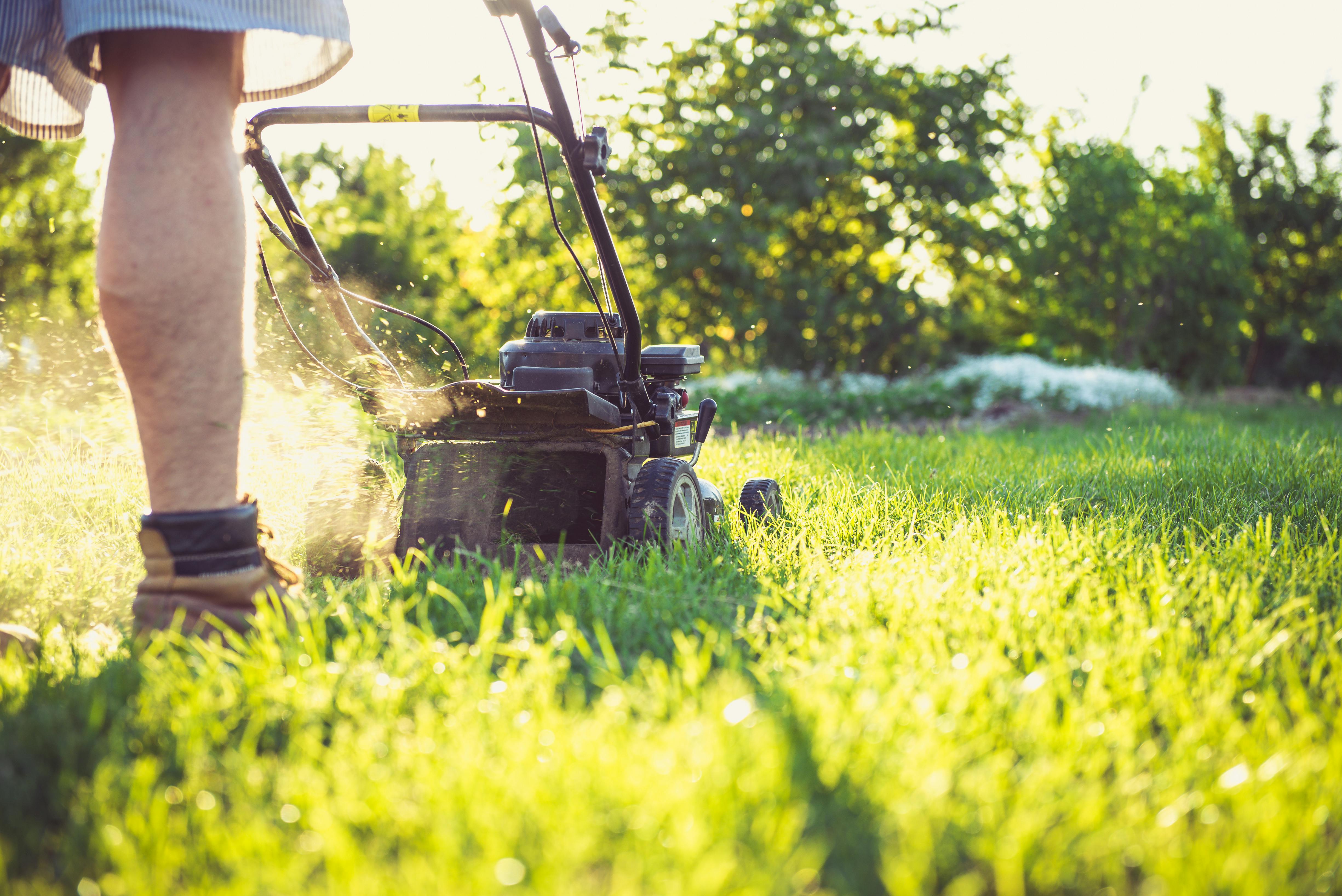
Raising the height of your mower blades can make a massive difference. For Kingston lawns in July and August, aim for about seven to eight centimetres, roughly three inches or a bit more. Taller grass shades the soil underneath, which keeps the root zone cooler and reduces how quickly surface moisture evaporates between watering sessions. It also shades out weed seeds that need direct sunlight to germinate, which matters if you’ve been fighting crabgrass.
The one-third rule applies all year but matters more in summer: never cut more than one-third of the grass blade at a time. If the lawn has gotten long over a few missed weeks, cut it down in stages rather than all at once. On days when the lawn is visibly dry and stressed, skip the mow entirely, since cutting grass under those conditions only adds to the problem.
Should You Fertilize in Summer?
For most lawns in Kingston, the answer is probably not in July or August as peak heat isn’t the right time. Fertilizer pushes new growth, but new growth on a lawn under heat stress is weak and needs more water than the rest of the grass to sustain itself. It’s also more vulnerable to burning, either from the heat or from the fertilizer application itself. You might see a short burst of green followed by a decline.
If your lawn needs feeding during the warm season, early June is the most reasonable window. After that, the better time for fertilizing a lawn in Ontario is late August into September, when temperatures drop and the grass is ready to grow again before winter. A fall feeding does far more for long-term lawn health than anything applied in July. If you do fertilize in summer at all, choose a product that releases slowly rather than pushing a flush of growth all at once.
Earth-Friendly Habits Worth Adopting
Leave your grass clippings on the lawn rather than bagging them after each mow. Clippings decompose quickly and return nitrogen to the soil naturally. Under normal conditions you won’t notice them within a day or two, and over a full season of grasscycling they can reduce how much supplemental fertilizer your lawn actually needs.
Mulching your garden beds works on the same principle. Two to three centimetres of organic mulch across the beds keeps moisture in the soil during dry stretches, which reduces how often you need to water through the hottest part of the season.
One more thing, especially if you’re near the St. Lawrence or anywhere around the Thousand Islands area: lawn chemicals wash off during rain events and reach the watershed. Spot-treating weeds by hand or with a targeted application is better for the lawn and better for what’s downstream. Pull by hand after rain when the soil is soft and most summer weeds come out clean.
Getting Through Summer Without Overdoing It
Summer lawn care doesn’t have to mean a full weekend of work every couple of weeks. Water deeply, mow at the right height, hold the fertilizer until temperatures drop in late August, and let the clippings stay where they fall. Your lawn is more resilient through the summer months than most homeowners expect.
If you’d like a professional set of eyes on your lawn this season, Marshall’s Lawncare offers seasonal maintenance services and free estimates across Kingston and the surrounding area. We’re happy to help you figure out what your lawn needs, and what it doesn’t.