You laid down sod a couple weeks back but instead of green lawn you’re seeing a worrying yellow. Take a breath as this can be salvaged. Yellow sod almost never means dead sod, and in nine cases out of ten we see with yellow sod here in Kingston, Ontario, it’s fixable with a change to your routine rather than a truck of new turf.
The Most Common Cause: Watering Problems
Walk the yard and look at where the yellow shows up. Does it show along the edges of each sod roll first? That’s underwatering. The perimeter of every strip dries out faster than the centre because there’s more exposed surface, and once those root threads dry past a certain point, the blade above just gives up. If your new sod is turning yellow within the first few weeks or so then water is almost always the culprit. New sod needs to stay damp, not completely soaked, for roughly the first two weeks while roots are knitting into the soil below.
With overwatering, the grass goes yellow and almost mushy, and if you press a boot into it the ground squishes as opposed to springing back. Pull back a corner of sod, and if the soil underneath smells sour or looks grey rather than brown, this means you’ve drowned the roots and they’re starting to rot. This will be a tougher fix so back off entirely and let things dry out for a few days before resuming a normal sod watering schedule after installation.
For most Kingston yards, that schedule looks like watering twice a day for the first week, once a day for the second, then tapering to two or three times a week as the roots take hold. Clay soil holds moisture longer than sand does, so if your yard has the heavy grey clay common around here, you can usually stretch those intervals further.
Poor Soil Contact: The Cause People Miss
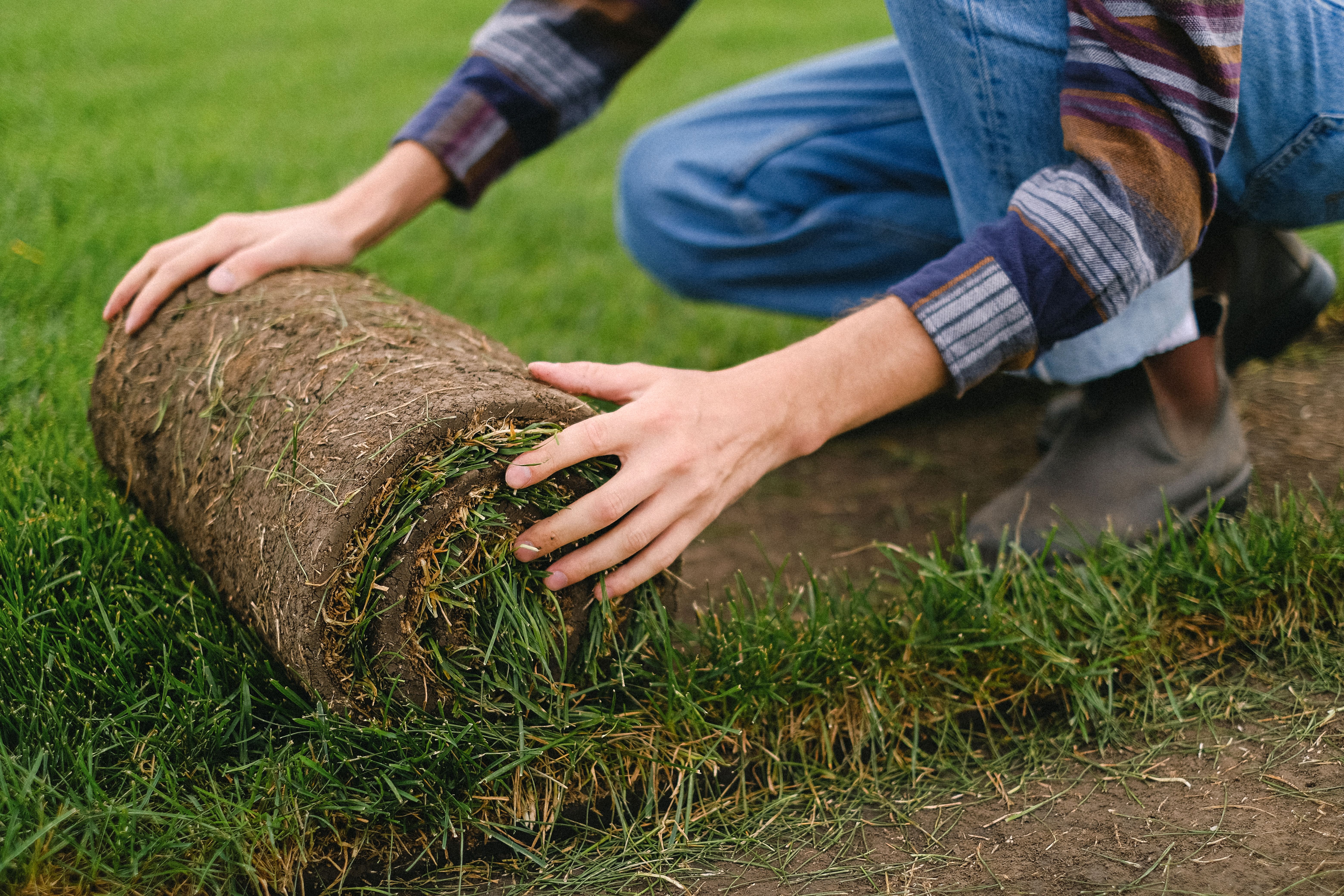
If a section of sod was laid over a low spot, leftover mulch, or ground that wasn’t raked fully flat, there may be an air gap underneath and roots can’t cross an air gap. This is known as poor soil contact and is easy to miss when the top of the sod can look perfectly fine while the roots underneath struggle. Lift a corner of the sod and inspect for dry, loose soil underneath with visible space between the sod and the soil. Press it down firmly, water it once heavily, and give it about a week before reassessing.
Yellow Grass With Green Veins? That’s a Nitrogen Problem
This one has a specific look to it, and once you’ve seen it you’ll recognize it instantly. The blade itself yellows while the veins running through it stay green, almost like a leaf in late fall. That pattern points to nitrogen, the nutrient grass burns through fastest while it’s establishing new roots. New sod usually arrives with a starter fertilizer already worked into the soil layer underneath, but that supply runs out faster than most people expect, sometimes within three to four weeks depending on how fast the grass is growing. Applying a light ammount of fertilizert that’s built for new sod will usually help turn things around within a week or two.
Other Culprits: Pet Urine, Heat Stress, and Fungal Disease
A few other causes show up less often but are still worth ruling out.
- Pet urine burns a small, sharply defined yellow circle, often with a ring of darker green grass around the edge where diluted nitrogen acted like fertilizer instead of poison
- Heat stress during a run of hot, dry afternoons can push sod into dormancy that looks yellow and brown, particularly on yards that face south and get full sun into the evening
- Fungal disease is the one that’s hardest to diagnose from a description alone. It tends to show up as irregular patches with a different texture, almost powdery or slimy depending on the fungus, and it’s the case where we’d actually want to see a photo or walk the yard ourselves rather than guess
When Does New Sod Turn Green Again?
If the cause is watering or soil contact, expect to see an improvement in about a week once you’ve corrected it with full colour returning by the second or third week mark. Nitorgen deficiency responds a bit slower taking about two weeks since your fertilizer will need time to work down to the roots. The main thing is to practice patience and not expect and overnight fix. If you’ve adjusted watering, checked for air gaps, and its still yellow after a few weeks that usually points to root rot or disease. We offer free estimates and can even help you diagnose the problem before you spend any money guessing. Seasonal maintenance clients also get their sod inspected as part of the first cut helping problems like this get caught before they develop.