Snow mould usually shows up in late March, when the last grey bank of snow along the driveway finally retreats and underneath it the grass is flattened, crusty, and stuck together in circular patches roughly the size of a dinner plate. Some look like someone dusted them with flour, while others have a faint pink edge that’s easy to miss unless the sun is on them. Snow mould is one of the problems where most of the work to prevent it happens right now, in the fall, before the first real snowfall.
What is Snow Mould?
Snow mould is a lawn fungus that develops under snow cover and despite the name it doesn’t need extreme cold. Grass that stays cool and damp for weeks under an insulating blanket of snow, sitting on soil that never froze completely is the exact environment snow mould thrives in.
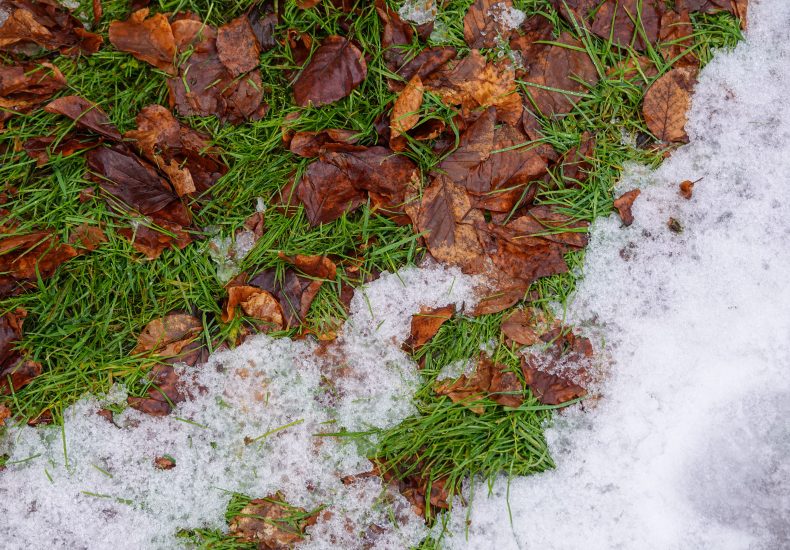
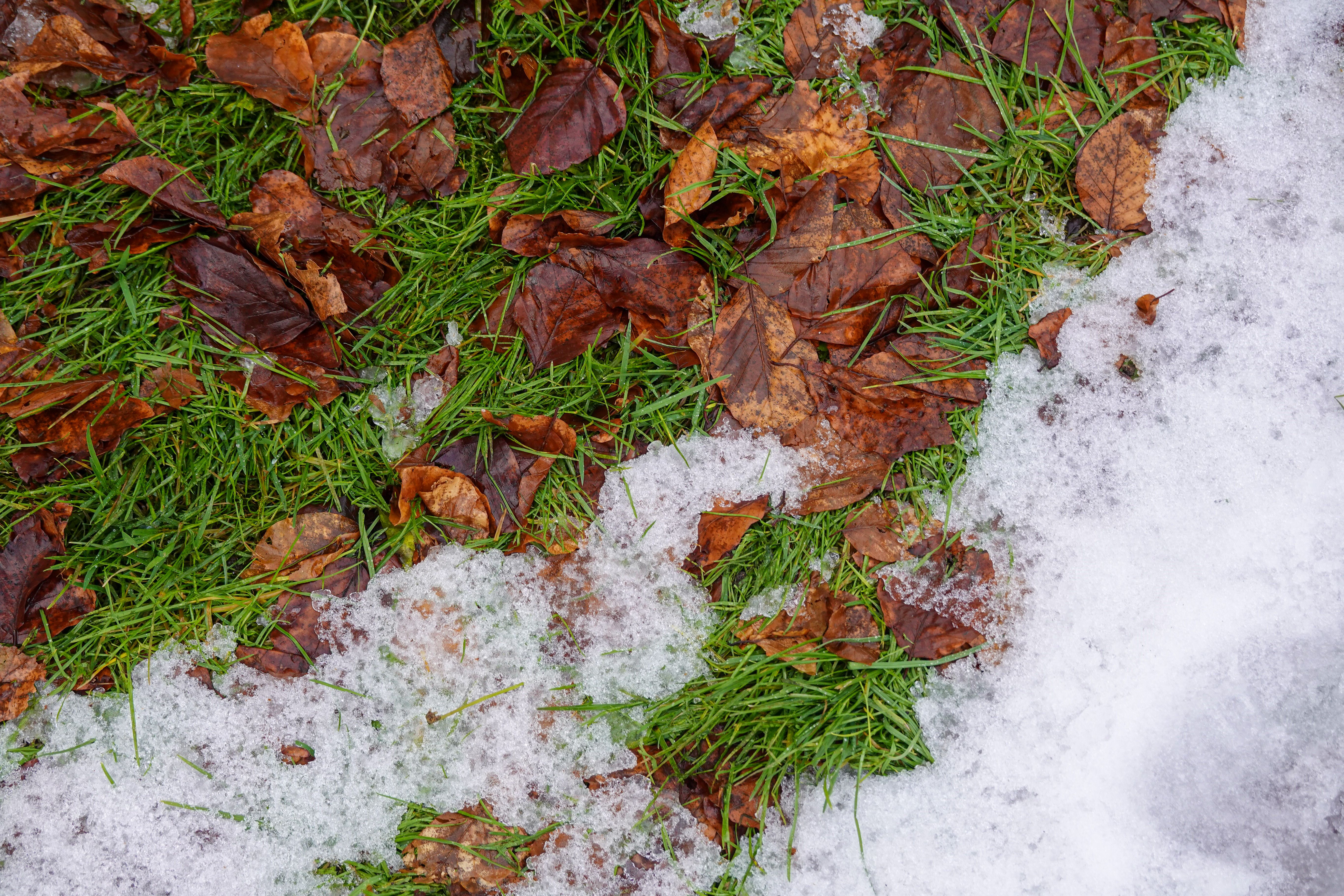
Picture an early snowfall before the ground has had a chance to fully freeze and may end up sitting there for a few months. Down at grass level the temperature stays just above freezing and the moisture never leaves, which is close to ideal for the fungus. Long grass that flops over gives it more material to feed on and so does a layer of wet leaves somebody intended to rake in October.
During a dry, cold winter you may see little to none of it, whereas after a wet winter with early snow and a gradual spring melt, you’ll see more.
Grey vs Pink Snow Mould
There are two types, and they behave quite differently.
Grey snow mould (caused by Typhula fungi) leaves straw-coloured or greyish-white circles, usually 15 to 30 centimetres across. When the snow first melts you may notice a fuzzy, cobweb-like layer covering the patch. Look closely and you might find tiny hard brown or black dots attached to the blades, which are the structures the fungus uses to survive the summer. Grey mould typically kills the leaf blades but leaves the crown alive, so most of the affected lawn recovers on its own.
Pink snow mould (Microdochium nivale, sometimes called Fusarium patch) is the worse kind. The patches are often smaller, with a pinkish or salmon edge that’s most visible in direct sunlight. It can kill the crown and the roots, which means those spots won’t fill back in without some help from you. And it doesn’t strictly need snow, since a stretch of cool, rainy weather in October or April is enough for it to get established.
How To Prevent Snow Mould This Fall
Keep cutting until the grass stops growing. Your last mow of the season in Kingston usually happens somewhere around the end of October or early November depending on the weather that year. Lower the blade height gradually over the final two cuts to finish at roughly 5 to 6 cm. Be careful not to scalp it since cutting the grass shorter can further stress the plant before winter.
Get the leaves off. A wet layer of maple leaves under a snowbank is a snow mould factory. Rake them up, or run the mower over them a few times until they’re shredded into small pieces that settle down into the turf. Whole leaves that will become matted together and suffocate the lawn with moisture are the problem.
Watch your fertilizer timing. A heavy application of quick-acting nitrogen in October pushes out soft, lush growth immediately before the snow arrives, and that’s exactly what the fungus prefers. A winterizer fertilizer is different, because it’s applied at a specific point in the fall to feed the roots rather than the blades, and on most Kingston lawns it does more good than harm.
Deal with thatch. If the spongy layer between the soil and the green grass is thicker than about 2 centimetres (¾ inch), dethatch or core aerate in early fall. On the heavy clay soils common around Kingston and Amherstview, aeration also helps the surface drain faster in spring, so the meltwater doesn’t sit and pool.
Think about where the snow goes. If every shovelful from the driveway lands on the same strip of lawn, that strip will carry the deepest, slowest-melting snow on the entire property, and it’s also where you’ll see the worst mould in April, along with road salt damage if you’re close to the street. Spread the piles around if you can to avoid stressing one specific area.
Snow Mould Treatment In Spring
Wait until the ground thaws and the surface dries a little, then rake the matted areas gently with a leaf rake to lift the blades and allow air and sunlight to reach the crowns, which by itself clears up most grey snow mould within a few weeks. Don’t attack it with a stiff steel rake, or you’ll pull out healthy plants along with the damaged ones.
On grey snow mould fungicide accomplishes very little in spring, since the fungus has already stopped growing by the time it becomes visible. Pink snow mould sometimes responds to a spring treatment, especially if the weather stays cool and wet, but fungicides work best as prevention, applied in late fall on lawns that get damaged year after year.
If you’ve noticed by late May that a few patches are still bare, they will need a little extra help. Add a thin layer of topsoil and overseed in the affected area to help the patch recover.
Fall Lawn Care In Kingston, Done For You
If you’d rather not handle the fall cleanup yourself, our seasonal maintenance crews can take care of the last mow and leaf cleanup across Kingston and the surrounding area. Let’s make sure your lawn is prepared for the winter ahead.