There’s always one day in winter the snow pulls back from the driveway, and the bare branches in your yard suddenly look untidy, with crossed limbs everywhere making you want to grab the loppers. For most of your deciduous trees and shrubs that instinct is correct, and late winter pruning is probably the most useful maintenance you can give them all year. However a few plants in a typical Kingston yard have already formed next spring’s flowers, and if you cut those now you’ll be looking at green leaves and no blooms in May.
Why Does Dormant Pruning Work So Well?
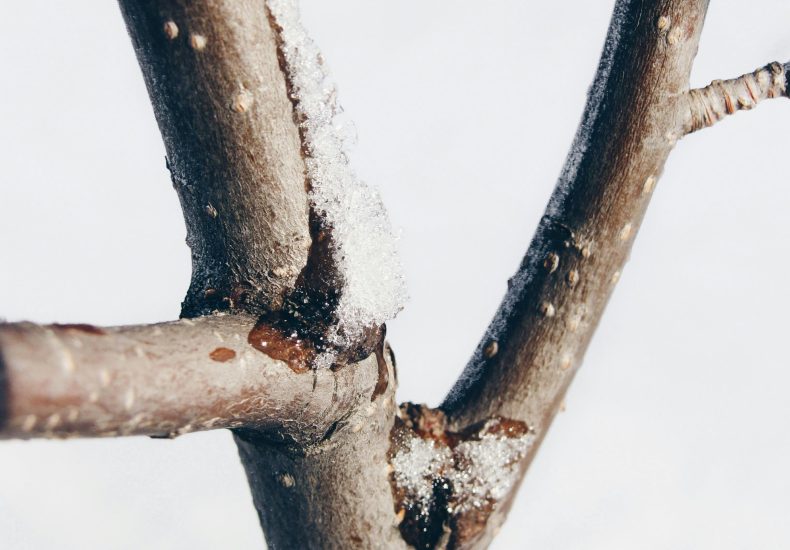
In July a maple is a solid wall of leaves, and you’d never notice the two branches rubbing each other raw in the middle of the crown, but in February they’re right there clearly visible. Dormant pruning simply means cutting while the plnat is resting, after the leaves have fallen off and before the buds break. The insects and fungi that typically spread disease are pretty much inactive in the cold meaning a fresh cut isn,t an invitation like it will be later on. Timing matters aand in the Kingston area the ideal window runs from about mid-February to late March, but skip the really cold days, because below about minus 10°C the wood becomes brittle and cuts can tear instead of slicing cleanly.
What to Prune in Late Winter
Almost all deciduous shade trees such as oak, linden, honeylocust, ash and most others do well with a late winter cut. Oaks especially as oak wilt has been confirmed in parts of southern Ontario. It probably isn’t on your street yet, but the beetles that carry it are attracted to fresh wounds in spring and summer so pruning an oak in February eliminates that particular risk.
Pruning fruit trees in winter is standard practice for apples and pears, and there’s a disease reason behind it. Fireblight is a bacterial infection that moves into fresh cuts during warm, wet weather. That means a cut in late winter gives the wounds time to close before it’s active. You’ll also get a better look at the shape you’re building, which matters a lot with fruit trees since you want an open centre where light can reach the fruit.
Summer-flowering shrubs are where the rule about “new wood” comes in. Some shrubs grow fresh stems in spring and then bloom on those same stems in summer. Cutting them in late winter doesn’t hurt the flowers at all, and it often gives you more of them. In this group you’ll find:
- Panicle hydrangeas (like Limelight) and smooth hydrangeas (like Annabelle)
- Spirea that flowers in summer
- Potentilla
- Rose of Sharon
Red osier dogwood is grown by gardeners for the red stems, and since the youngest stems have the most vivid colour, you’ll want to remove about a third of the oldest, dullest canes at ground level each March.
Anything dead or broken can come off whenever you notice it, any month of the year.
What Not to Prune in Winter
Spring-flowering shrubs and trees
Lilac, forsythia, magnolia, serviceberry and flowering cherry (plus rhododendrons, if you’ve got one tucked against a north wall) all set their flower buds the previous summer and autumn. The fat buds you can see on a lilac in February are this May’s blooms, already packed and waiting. This means if you cut them now you’re cutting off the flowers. Pruning for spring flowering shrubs is best left to right after they finish blooming which is about late May to early June around Kingston. This gives the plant the rest of summer to grow out new wood and set next years buds.
Maples, birches and walnuts
If you cut into a sugar maple around Late February or March it’s going to start dripping and sometimes will drip alot. The better window is usually midsummer once the leaves have fully opened and the sap pressure drops meaning you can prune without the dripping. Birch and black walnut trees behave the same way and should similarly be left to summer.
Evergreens
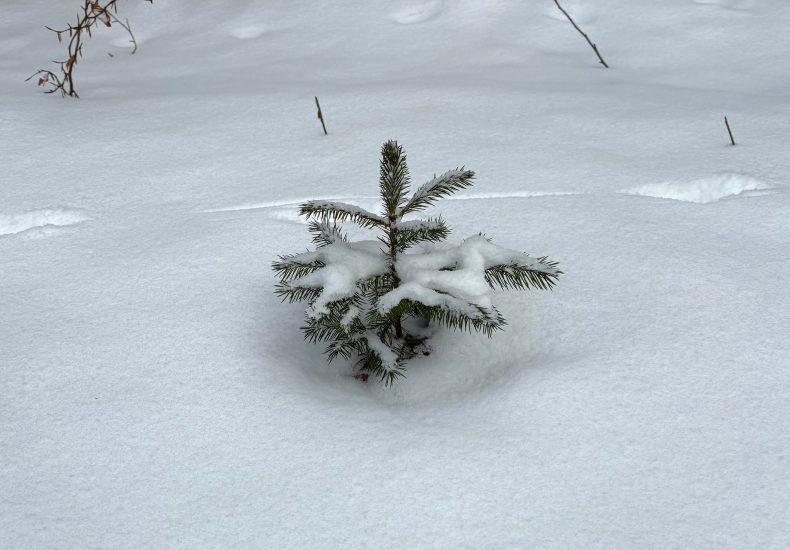
Species such as cedars and yews don’t require much attention in the winter and are better done in spring once you can clearly see where the new growth is emerging from. Spruce and pine are a bit different since they don’t regenerate from old bare wood, so taking a branch too far back on a spruce can mean that spot stays bare permanently.
How to Make a Good Cut
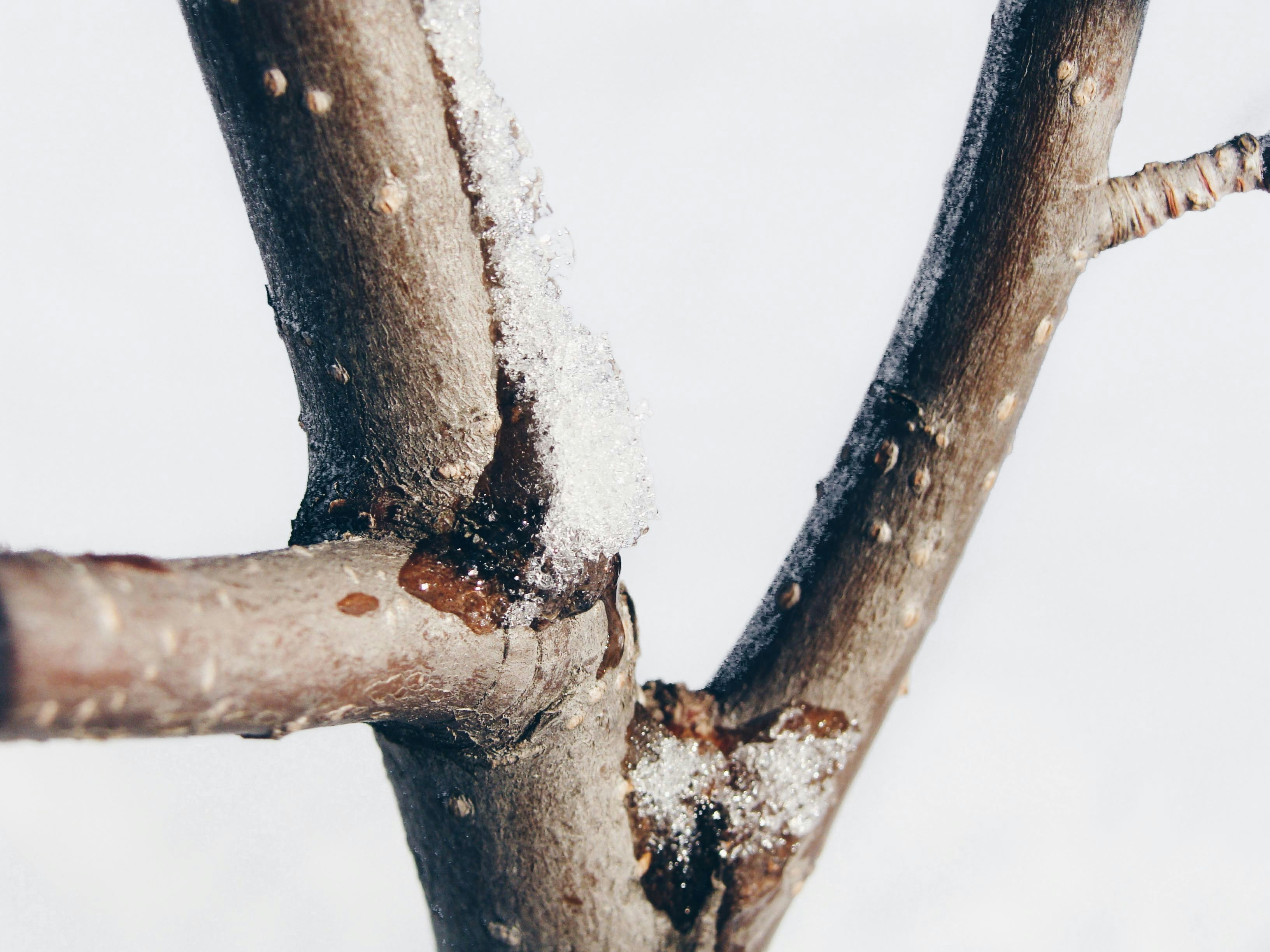
The first thing you’ll want to do is find the branch collar which is the slightly more swollen portion where the branch meets the trunk. Make sure to cut just outside the collar and not flush with the trunk since the collar is what grows over the wound. For any limb heavier than you can hold with one hand use three cuts. Make an undercut about 30 cm out from the trunk, then a top cut a little farther out so the limb drops cleanly, and finish with a third cut that removes the remaining stub at the collar. This helps to ensure a falling branch doesnt strip bark off the tree. Be sure to not remove more than 25% of a tree’s canopy in a single year, and make sure to use sharp pruners to ensure you cut the branch rather than crushing it.
Call Us Help With Pruning in Kingston, Ontario
Our crews can handle late winter pruning as part of our seasonal maintenance package across Kingston, Amherstview, and out toward Odessa and South Frontenac. We are happt to give you a quote or simply tell you whats good to come off now and what can wait.