Every September-October, Kingston lawns disappear under a layer of leaves and every fall, homeowners wonder the same question: should I rake them, mulch them, or just let them sit? There’s no single right answer as it depends on how many leaves you’re dealing with, what shape your lawn is in, and how much time you’ve got. Keep reading and we’ll walk through when each option makes sense for your yard.
What Happens When Leaves Sit Too Long
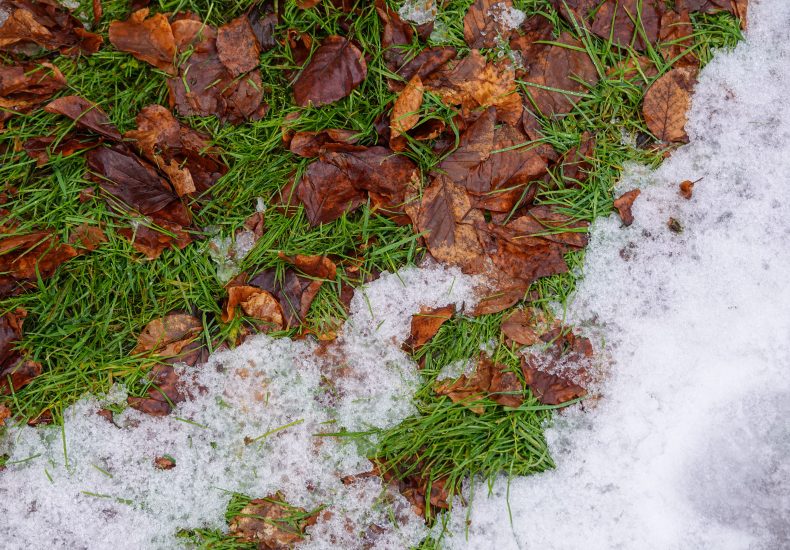
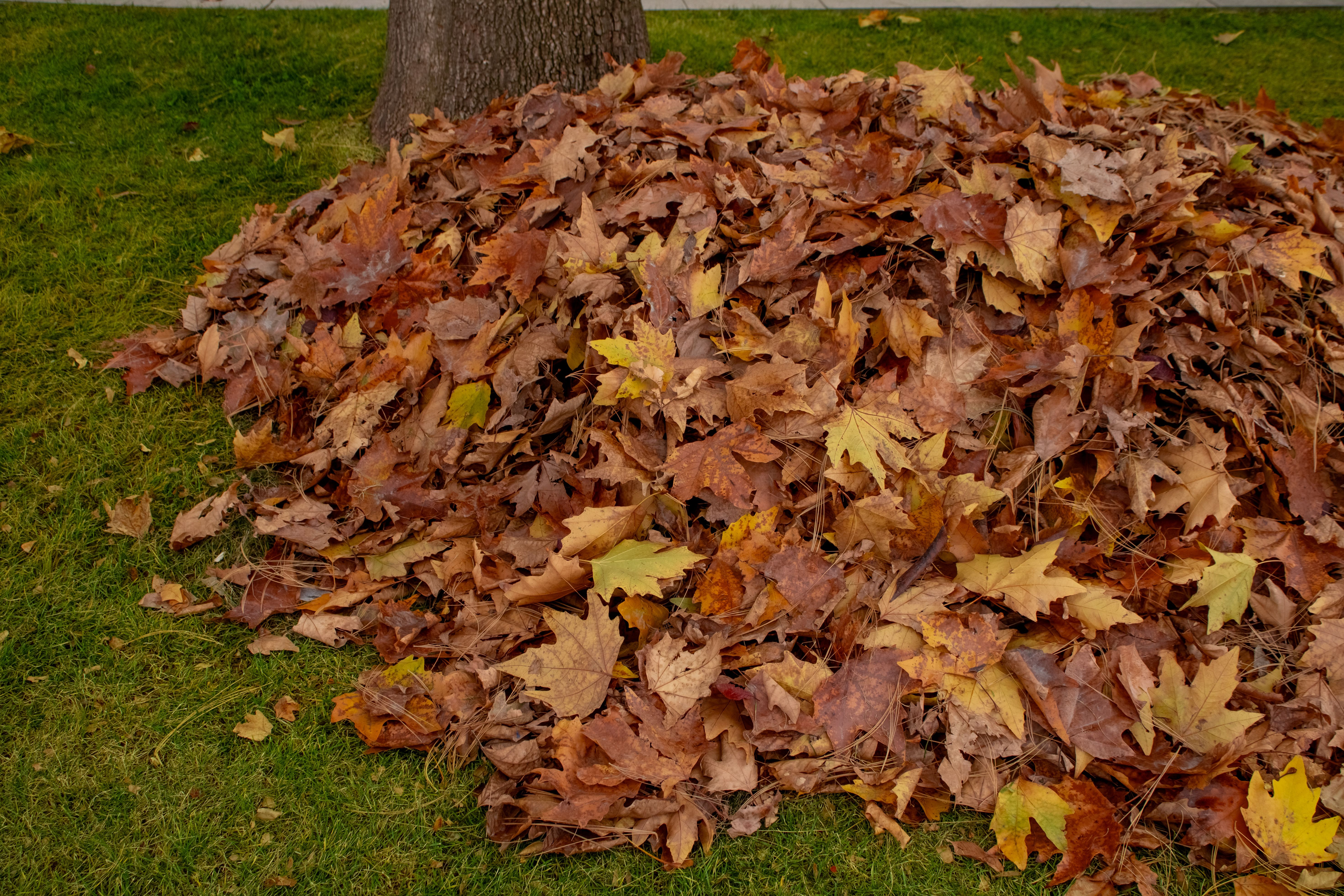
A thin scattering of leaves won’t hurt anything, but once leaves on grass pile up thick enough to block sunlight, your lawn starts to suffer. Grass underneath a heavy leaf mat can’t photosynthesize properly, and moisture gets trapped against the blades until mould and fungus move in, especially during the damp stretches Kingston gets in late October. By the time snow falls on a lawn that’s been smothered for weeks, you’re certainly looking at dead patches and thin spots come spring. A good rule to follow is if you can no longer see the top of the blades of grass it’s time to do something about it. Waiting until the pile is thicker and heavier due to being smothered for weeks and picking up moisture just makes the job harder.
Raking
Raking your lawn is the classic way to deal with the situation and for good reason. It’s the right call when you have heavy leaf cover, clumping leaves, or if your yard sits under a thick canopy of trees. A few notes are to make sure you try to rake when leaves are dry. Wet leaves can stick together and weigh twice as much making your work harder than it needs to be. Break the job into seperate passes rather than waiting for every leafs to fall since a few lighter rakes is less back breaking than one massive one. You can choose to either bag your leaves for the City of Kingston’s collection program or can compost them at your home.
Mulch Mowing
Run a mower without a bag over a yard of dry autumn leaves and something useful happens. What was sitting on top of the grass ends up threaded through it instead, chopped down to pieces the size of a dime. That’s mulch mowing, and it’s where a lot of homeowners are leaving free fertilizer on the table, since mulching leaves into your lawn returns nutrients and organic matter straight back into the soil as the pieces break down over the following weeks.
Here’s how to mulch leaves with a mower properly:
- Wait until leaves are dry, since wet leaves clog the mower deck and leave clumps instead of fine pieces.
- Raise your mower blade a notch higher than usual, then mow in overlapping passes.
- Go over thick patches twice if you still see whole leaves after the first round.
The benefits of mulching leaves for lawn health go beyond nutrients as fine leaf litter helps soil hold moisture through a dry fall, and it cuts down on how much yard waste ends up at the curb. It’s one of the simplest earth-friendly habits a homeowner can build into a fall routine, and it takes no extra tools beyond the mower already sitting in the garage. One caution is mulch mowing only works with a manageable leaf load, and if your lawn is buried three inches deep under a silver maple, no mower is chopping that down to size in a single pass. You’d likely want to rake off the bulk of it first and mulch what’s left behind.
Can You Just Ignore Them?
A light scattering, thin enough that grass is still visible underneath, generally isn’t a problem. Some of that organic material breaking down over winter can even do the soil some good, quietly, without any work on your part. Where it goes wrong is scale as ignoring a thick, wet mat of leaves through November isn’t really a low-effort choice, it’s a decision to deal with dead grass in April instead of leaves in October, and dead grass takes a lot longer to fix than an afternoon with a rake.
Which Option Fits Your Lawn?
Walk down almost any street in Kingston’s west end or out toward Amherstview in mid-October and you’ll see both approaches on the same block, one lawn raked bare, the next buried ankle-deep in maple leaves, and most yards end up using some mix of raking and mulching depending on the week. Early fall, when leaves are sparse, mulch mowing usually handles it on its own, but peak season, once the oaks and maples really start dropping, raking takes over.
A few questions worth asking about your own yard:
- How many mature trees sit on or near your property, and what kind?
- Do you already mow weekly, or would mulching mean an extra trip out with the mower every time?
- Is your lawn already thin or stressed heading into fall? If it is, lean toward clearing leaf cover faster rather than letting mulch mowing catch up on its own schedule.
If your yard backs onto a wooded lot, raking is part of your fall no matter what you decide about the rest, and the City of Kingston’s leaf collection schedule runs through late fall, so timing bigger rake sessions around pickup days saves a second trip hauling bags to the curb.
Let Us Handle the Cleanup
Fall gets busy fast, and leaf season has a way of piling up before you’ve found a free Saturday for it, so if your lawn needs more than a weekend can fix, our seasonal maintenance team handles fall cleanup start-to-finish, from raking and hauling to mulch mowing done properly. We offer free estimates, so you’ll know what the job costs before anyone touches a rake.