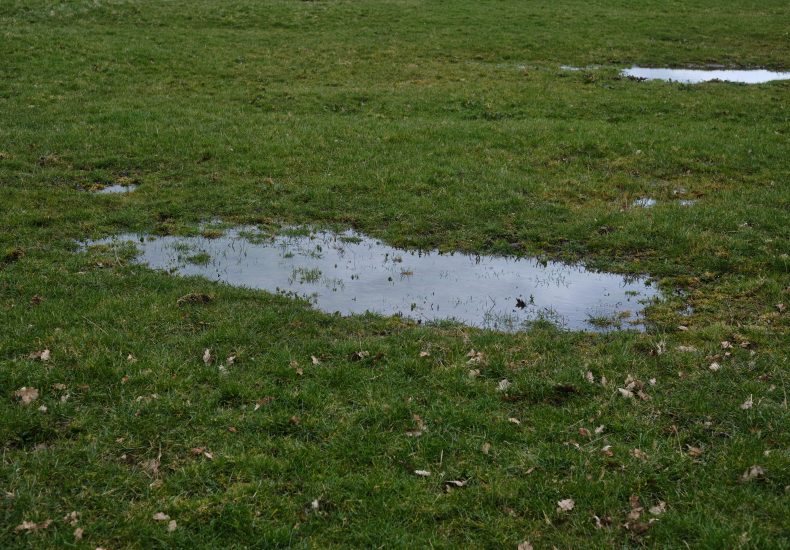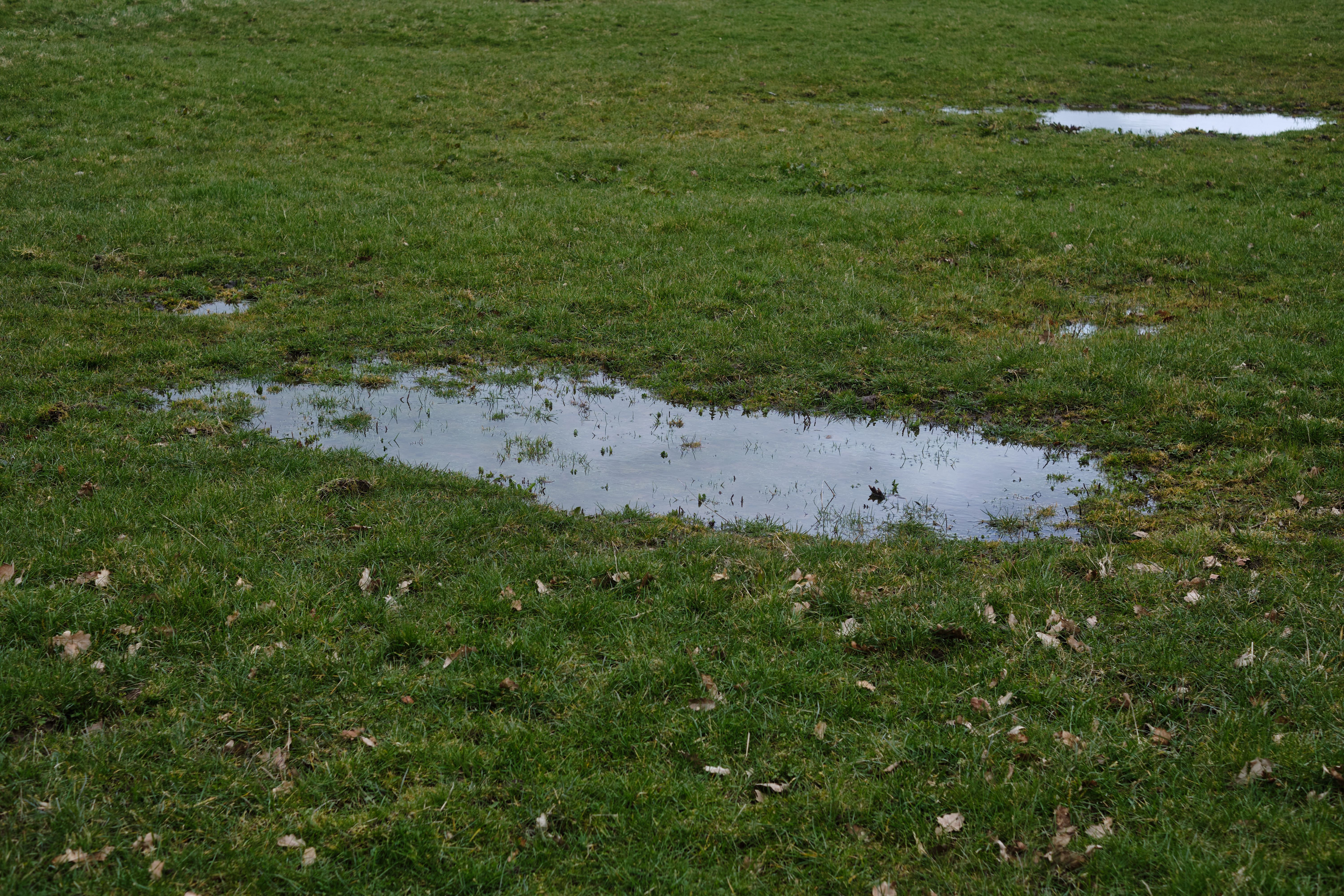
A couple days after a heavy rain you might notice a puddle sitting in the yard that hasn’t seemed to move an inch. Your plants are having a hard time laying down roots and beneath the soil looks grey and soggy. These are both tell tale signs of clay. Kingston sits on a wide bed of it and no amount of seed or fertilizer can fix what boils down to a drainage problem.
Why Kingston Yards Drain So Poorly
Much of the ground under Kingston sits on a deposit locals sometimes call Gananoque clay, laid down under an ancient lakebed and backed by limestone bedrock that’s barely below the surface in some yards. That combination gives Kingston Ontario’s clay soil two problems at once: it holds water like a bathtub, and the limestone underneath pushes the pH toward alkaline, which most garden plants would rather avoid.
Zoom into a handful of that soil and the drainage problem turns out to be mostly mechanical, not chemical. Clay particles are flat and microscopic, thousands of times smaller than a grain of sand, and packed together they leave almost no room for air or water to move between them. Sand is different as its particles are comparatively huge and round, with wide gaps between them. Water runs straight through sand where as in clay, it just sits there.
Soil Amendments for Clay Soil That Actually Improve Drainage
Compost probably does more heavy lifting here than anything else you can buy. Worked into clay, organic matter wedges itself between the mineral particles and holds that space open even as it slowly breaks down further, giving roots and water actual room to move. It also feeds the biology in the soil. Earthworms and fungal networks end up doing a lot of the structural work compost gets credit for.
Gypsum for clay soil solves a different piece of the puzzle. Chemically, it’s calcium sulfate, and it works by swapping the sodium ions holding clay particles bound tightly together for calcium ions instead. That process, called flocculation, lets the particles clump into small crumbs rather than staying packed flat against each other. Crumbly soil drains and flat, dense soil doesn’t.
Perlite is the amendment most people skip, mostly because it looks like styrofoam and feels like it shouldn’t do much. It’s actually expanded volcanic rock, popped under heat the same way popcorn pops, full of tiny air pockets that stay open in soil for years. Mixed into clay, it physically props the particles apart. Compost eventually breaks down where as perlite mostly doesn’t.
How to Improve Clay Soil Drainage the Right Way
Getting this right comes down to depth and proportion, not just picking the right bag off the shelf. Spread three to six inches of compost over the area you’re amending, then work it down into the top ten to twelve inches of soil, which is roughly where most root systems actually live and breathe.
Gypsum works best mixed in at the same time rather than applied on its own. A standard rate runs around forty pounds per thousand square feet for a first application, worked into the same depth as the compost. Combine the two and you’re addressing the chemistry and the structure of clay in one pass instead of two separate projects spread across a season.
None of this is a weekend fix, either. Clay that’s been compacted for a decade doesn’t loosen up after one round of amendments. Expect to repeat compost applications every fall for two or three years before the soil really starts to behave differently underfoot.
We Can Help
If you’re experiencing issues with clay soil we may just be able to help you out. Marshall’s garden centre carries the compost and amendments mentioned here, gypsum and perlite included. Additionally, our crews handle grading and drainage work for yards across Kingston and the surrounding area when the fix needs to go beyond what a few bags can do. Stop by and our team can provide you an estimate and give you some tips for helping your lawn drain.